Saturday, May 2, 2015

Jonathan Tiersten and the Art of Negotiating

JT and I at the 2015 Macabre Faire Film Festival.
I recently had the honor and privilege to interview a great friend of mine and industry veteran, Jonathan Tiersten. He is an actor and singer known for his role in the cult horror franchise Sleepaway Camp and is a staple here in Colorado on the indie music circuit. Jonathan has recently been expanding his film career as an actor and producer and was kind enough to answer several questions I had about negotiating within the entertainment industry.

How would you say deal making and negotiation is different in show business as opposed to other business dealings?
Well, firstly, I would say that it depends on the level of the project.  Indy projects can all types of deals from very casual to very much by the book.  The more money there is involved in a project, the more formal the negotiation tends to be.  One of the main changes I have seen is that in person auditions are becoming less frequent and people are hired on name recognition alone.

How do you separate the people from the problem when you are negotiating? What tips do you have for new negotiators who are trying to do this? 
It isn't easy.  I very recently had this experience. I think the key is to not take things personally.  Everybody is your friend until they have to write a check.  I think the more detailed you are before you even enter the process the better off you will be.  Preparation goes a long way.  Look for things that might be sticking points and figure out possible resolutions before you even start talking.

How do you handle positioning bargaining tactics?
That is something that, I think, can only come from repetition.  I think the most important thing you can have is your integrity.  That may sound easy on it's face.  I recently spoke with a CEO of  Fortune 100 company and he told me, "Everybody will take free shit, even if it hurts someone else".  I hope he is wrong, but I think it is important to have a good feel for the people you are working with.

Would you say there any dirty tricks a person aspiring to get into entertainment business should know?
I don't know that there are dirty tricks.  I would say that you have to take a leap of faith and be willing to fail.  Learning how to deal with failure is an enormous part of this business.  It never feels good but you have to learn how to use it constructively.  Flying off the handle and having a tantrum or going into a deep depression may seem like the thing to do at the time, but they don't get you anywhere.

What was the most challenging negotiation you've experienced? What was the outcome?
I had a different answer for this question up and until two days ago.  I have been working with a couple of producers in Hollywood who have a feature debuting at The Seattle International Film Festival.  We just met with the aforementioned CEO.  It took me several years to set up the meeting (not to mention build my own resume).  I spent a ridiculous amount of money to get to the meeting and equally as much on the dinner.  Anyway, the CEO went on a roughly three hour monologue about his amazing philanthropic exploits and spectacular business acumen until I finally interjected.  I could not believe the producers had remained silent.  They seemed to be very intimidated  They talked such a tough game when I had spoken with them previously.  At that point the CEO responded by saying, "Okay, tell me how much you need".  They low-balled it and quoted a number about 1/2 of what we had discussed.  He responded by offering less than a quarter of that because he said he does not want it to be his head on the chopping block.  Truth be known the amount of money we were discussing isn't a lot to him.  I am still reeling from the affects.  Answering this question, again, for you makes me want to take heed of my own advice.  I must learn from this.  Right now I cannot say what that lesson is.  I sent a very terse email to the CEO after the meeting and excused myself (permanently) from the negotiation.  He said he would continue to talk to them (the producers) independently which I made a condition of my exit.  I also called the producers and said I was out.  They said that if he indeed invested I was due a finder's fee.  I told them I don't want it.  The CEO also told me to send him the dinner bill so he could reimburse me.  I told him, "Not a chance".  In the end it may seem like I have nothing, but I am pretty sure my integrity is intact and at least they are still negotiating.  It made me realize that I am good at the negotiating part but not so good at the ethical compromise part.  Maybe in my next lifetime. 

To learn more about Jonathan Tiersten and his work, please visit his official site HERE.

~Evgueni Mlodik

Sunday, March 8, 2015

Can E.L. James sue for plagiarism when she herself is a plagiarist?

Where (modestly budgeted) dreams are made...
Oh, the Asylum. I suppose a whole separate blogpost will be needed to cover "the little production comp
Subtle, eh?
any that could," but I will try to cover their history in a few brief sentences. The Asylum started out as an indie distribution company that eventually started producing their own low budget straight-to-video features, which gradually devolved into what is now known as a "mockbuster;" an ultra cheap shoddily made rip-off of an upcoming or recent big budget Hollywood film with a DVD artwork that suspiciously resembles the poster for some major theatrical release. While working the night shift at Hollywood Video during my college days, I had to restock such Asylum masterpieces asKing of the Lost WorldPirates of Treasure IslandWhen a Killer Calls18 Year Old VirginThe Da Vinci Treasure, and last, but not least, The Transmorphers. I will leave you to come up with your own conclusions as to which mock buster represents which Hollywood film.

Sure, you may hate it, but the creators of this
flick are crying themselves all the way to the bank.
Well, it seems now that the Asylum has hit an all new low and churned out their most shameless rip-off yet. As we all know, Fifty Shades of Grey started life as an online fan-fiction of Twilight, re-imagining the Mormon propaganda vampire yarn as a sexually explicit personal fantasy of an S&M relationship as envisioned by a bored housewife, that is the author, E.L. James. So now that the unavoidable "film of the book" has been released and set record box office gross records, The Asylum has to jump on board with a rip-off, using a highly unimaginative and over-used title Bound, which ironically brings to mind another 90s steamy cult flick. As typical for productions from Asylum, he film stars such C-list icon as Charisma Carpenter and newcomer Bryce Draper, along with everyone's favorite "other" Baldwin brother, Daniel, in a pointless role as Charisma's father just shove in another name actor on the DVD cover. The film's plot follows 50 Shades blow by blow, with same basic characters going through the exact same journey, the only difference being the social status swap between the two leads. The similarities are too many too list, in fact, the plot synopsis would work well for either films; two socially different people enter a taboo S&M relationship as the male partner's behest and it serves to the female lead to eventually realize they're incompatible. Granted, it's a plot as old as Skinemax, and we already endured this melodramatic softcore porn in such Zalman King epics as 9 1/2 Weeks and the abysmal Wild Orchid, but I guess Bernardo Bertolucci's Last Tango in Paris predates all of them.

So, the question arises. Why won't E.L. James sue The Asylum for plagiarism as so many other filmmakers have done and won? Well, that is because she is walking a thin line of plagiarism herself, seeing how her book originated as a very kinky Twilight fan fiction. One can even make a chart regarding which character from 50 Shades of Grey corresponds with which Twilight character.

It seems to me that E.L. James is afraid. She is afraid if she will take The Asylum to court, she will not only come off as hypocrite, but she's afraid of setting a precedent. If she sues the producers of Bound for ripping off her work, then why can't Stephenie Meyer sue James (real name Erica Mitchell) for stealing her work? It all seems like a hilarious case of karma, but realistically speaking, James has nothing to worry about, even if she and her agent are probably miffed at such being so shamelessly ripped off. It seems strange that The Asylum would make a title so radically different from the film they ripped off, but that could be due to The Hobbit and The Day the Earth Stood Still fiascos. Therefore, I can't really imagine anyone mistakenly picking up a copy of Bound, imagining it is Fifty Shades, which is The Asylum's entire business formula. Now, I guess Charisma Carpenter fans would be interested, as would fans of softcore porn films, but most of them loathe the E.L. James original, so they probably won't bother with a knock-off. Seems that both The Asylum and E.L. James screwed the pooch in their respective departments.

~Evgueni Mlodik


Sunday, January 11, 2015

A Short Interview with Rutanya Alda

Me with Rutanya Alda at an event in Denver.
It is not every day one gets to meet their idol. I am one of the lucky few to have met one of mine, the cult actress Rutanya Alda, who’s beautiful face should be familiar to fans of 70s and 80s films. She played such diverse roles the young bride in the classic The Deer Hunter and Joan Crawford’s hapless personal assistant Carol Anne in the infamous Mommie Dearest. I had the good fortune to meet with Rutanya a number of times and each time it was a revelation. Her stories about the film industry and her days working with such veterans as Brian De Palma, Roman Polanski, and Faye Dunaway are a treasure trove of interesting trivia about Hollywood and how a struggling artist can strive to succeed in the industry. A while ago, I had the privilege to conduct a short interview with Rutanya. It is not terribly long, but her responses are amazing and thought
provoking.

How did you start out in the film industry?
I started out as an extra.  My first job was as a student in Up the DownStaircase with Sandy Dennis.  I did a lot of extra work and also photo doubled for Mia Farrow in Rosemary’s Baby, and photo doubled for Barbra Streisand and played a townsperson in Funny Girl, I also did stand in for Anne Francis in Hello, Dolly!

What were your biggest obstacles while establishing yourself?
The obstacles are that there are thousands of people up for the same parts and it is also hard to get seen by casting people if they don’t’  know your work.

What would you say is your biggest accomplishment in the industry? Why?
The major films I have done, including The Deer Hunter, which won an Oscar for best film and the cult classic Mommie Dearest and now Amityville II: The Possession, which is becoming a classic.  I love my early films by Brian de Palma; his unique and original filmmaking in the late 60s/early 70s Greetings and Hi, Mom!; working with wonderful actors  - it’s a collaborative effort. It feels good when one can be in an environment that is collaborative and an actor feels safe to try and be creative in the moment.

What advice would you give to young people fresh out of film school and trying to launch a career in the film industry today?
My advice is if you have a second choice, do it.  The film industry as an actor is really tough and you have to have no choice but to do it. It’s like a virus that you can’t shake. Its the burning desire to express and create.  I often tell people “don’t do it”  and if they take my advice then I think they have saved themselves a lot of pain. If they don’t take my advice, they have the virus and they must do it.  There are hundreds and maybe thousands of people up for one part.  The odds are like the lottery.  So many variables come into why one is cast.  And often the best people are not.  Your age, your color of hair, who you know; silly things that have nothing to do with your talent. Your sanity is often questioned.  Having said all of this, if one must one must.  I certainly had to.  I also think the industry has changed so much.  If one can do one’s own projects, write, film and get it out there -- Being in charge of your own destiny, so to speak, as much as possible, and create, create, create on your own as much as possible so you don’t put your future in someone else’s hands all the time.  I also recommend studying all the time. Keep getting better. Study with good people.  I am still in class 40 years later.  I continue to grow and get better and better as an actress and creative person.

~Evgueni Mlodik

Sunday, December 14, 2014

Rosie King may be a good decade younger than me, but she's my hero.

To say that Rosie King's laid back, yet powerful and emotional speech on Ted.com struck a chord with me would be the understatement of the year. I knew that for this particular blog post I would like to address an issue I’ve both struggled with and embraced, something that I do not want to be defined by, but something that has always been a huge part of me and lead me on the path I am on today, even why I enrolled at Full Sail University. Yes, I have autism. A mild degree of it that, I guess, qualifies as Asperger Syndrome, which has effectively altered my social skills and shaped a detailed internal world for me consisting mostly of films and television shows. It’s a world I want to integrate with my “real” surroundings, so a career in the film industry would help me merge the two worlds together.

Rosie King really reminds me of myself, however I was not as brave as she was at sixteen. I would never have openly admitted my autism in public, though I’m pretty sure most people suspected it anyway, even though they were never exactly sympathetic to my predicament. I am also somewhat envious of Rosie’s supportive family, because my parents are staunch believers that autism “doesn’t exist” and that I am just “looking for attention.” Since I don’t want to spoil my relationship with my parents, this is a topic I no longer discuss with them.

I liked that Rosie explained that autism does not fit into one particular stereo-type and not all of us behave like Dustin Hoffman in RainMan. Also, not all of us are math geniuses, I far one, abhor the subject and barely passed it. However, just like Rosie, my autism expresses itself with vivid daydreaming to escape mundane reality and wild creativity and that can barely find an outlet. Since I’m not making any films at the moment, I try to do it through writing, but it’s not enough, so my day-to-day life and schoolwork start suffering.

Saturday, October 18, 2014

Will the new Tarantino movie shoot bring in more film business to Colorado?


I suppose you had to have been living under a rock to not have heard that Quentin Tarantino will be shooting his next film. After a series of controversy and false starts, The Hateful Eight will shoot in Telluride, Colorado after theColorado Film Comission, never very receptive to outside productions, offeredTarantinto a $5 million tax incentive to shoot here in December, and now it's touted that the $44 million behemoth is the first major film tobe shot in Colorado since the origial 1969 True Grit. So at long last, the fight is over, right? We Colorado filmmakers have finally scueeded in jump starting a film industry here in Colorado. Something we've been fighting for the good part of the decade. Well... Not so fast.
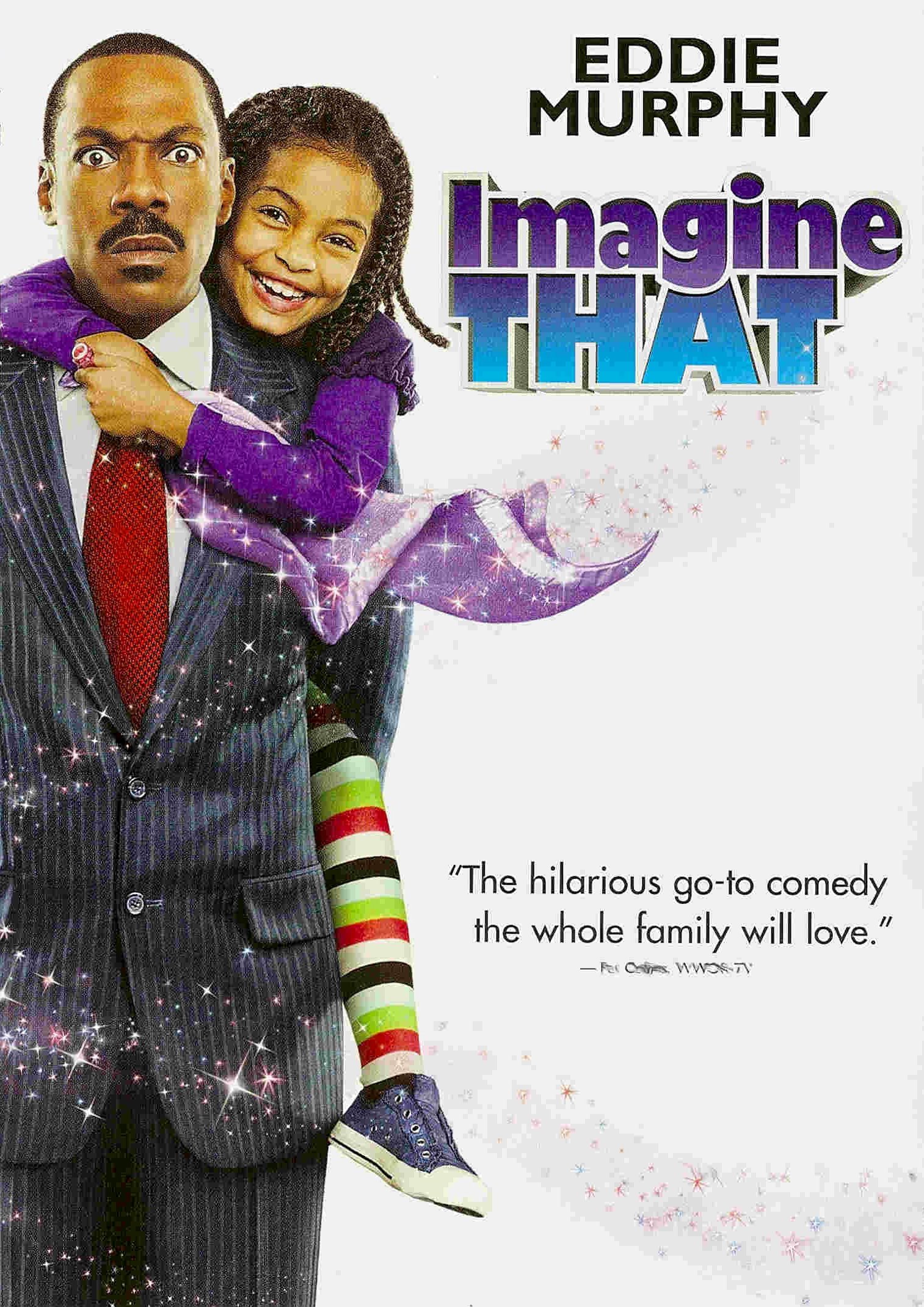
off, The Hateful Eight is not the first major production to shoot in Colorado since True Grit. That would be the 2009 EddieMurphy flop Imagine That; theprincipal photography of which was done in the highly picturesque city of Denver. The whimsical family movie proved not to be all that whimsical to the people who made it, especially Eddie Murphy. The film ended up only grossing$16 million nationwide against a $55 million budget, effectively putting another nail in Eddie Murphy's career and tainting Colorado as a jinxed place to shoot flops and tax shelter projects, an inside joke I heard from some industry insiders from which I think we are yet to recover. Of course, a big Tarantino blockbuster would be able to change that image and give Colorado a renewed lease on life as a versatile state where all sorts of films can be made. Be it westerns, or family friendly comedies, no matter what their eventual box office intake is.
While most of that may in fact come true, I have some major doubts that this one-off film shoot will change much for Colorado film community. First off, I want to give a first hand account that Colorado is already a very versatile hotbed for filmmakers. Local, filmmakers, that is. I've seen westerns (easiest thing to shoot considering the locale), hip modern indie yarn, films set in Nazi Germany and Soviet Eastern Europe, etc, etc. Most of the people who work here already know this about Colorado, but hardly anyone else does. Also, we're surroundedby such states as Utah and New Mexico, which already have a thriving film industry and got a head start over Colorado, where it has been trying to develop for more than a decade, but many of our conservative house members are less than keen on the idea of turning us into the next Georgia or New Mexico, so whatever bill gets offered every two years to help with tax incentives for filmmakers promptly gets squashed and we never receive any realy, depedenbale moneymakers to set up production here; the Hallmark tv movies, television series, and smaller budgeted studio releases/straight to video fare. These are the projects that keep studios coming back and film people steadily employed in their craft.
So, I guess, the point of this rant is that while having Quentin Tarantino's next opus shot here in Colorado will provide us with brief glitz and glamour of Hollywood, sadly it won't bring any new filmmaking jobs after they leave. Only a permanent sensible tax break for productions and improved publicity in trade papers can do that. Hopefully, however, I am wrong, and The Hateful Eight is the start of something big.
~Evgueni Mlodik

Sunday, September 14, 2014

The unsung behemoth of independent film is finally going to get its due with a tell-all book.

Original Theatrical Poster
(http://poster.scancollections.com)

Malcolm McDowell as the 
Anarchist Emperor
(http://telegraph.co.uk)
I don’t want to start this blog off with a cliché along the lines of “Love it or hate it” or “This controversial film,” etc, etc. I’ll be honest Let’s face it, have you ever met ANYONE who likes Caligula? Most likely no; everyone hates. Most film buffs I know love to hate it and/or dismiss it as a cheap porno and few, if any, know of its history in the independent film history; especially at the time of its (arguable) birth that were the 1970s. But not for long!

A new book is soon to be released, detailing Caligula’s bizarre and chaotic genesis and the impact it left in its scandalous aftermath, titled 200 Degrees of Failure: The Unmaking of Caligula. As a long time fan of the film’s unfairly reviled director Tinto Brass and an almost obsessive studier of the film and its botched editing, I have to say I am absolutely thrilled (oh, who am I kidding, I am as giddy as a schoolgirl) that authors RJ Buffalo and James E. Chaffin are going to lift the curtain of obscurity behind this film and its makers and make the general audience aware of the massive of weight of something most people consider to be a sick porno.

Caligula’s genesis is actually quite esteemed, with the original script having been penned by famed man of letters, Gore Vidal himself. And this is what made Caligula so unique. Vidal and producer Franco Rossellini decided not to shop it to any major studios, but do the film completely independently with their own funds, something that was still very rare during that time period (early to mid 1970s), especially for an established famous writer and a producer who only worked under his more famous relatives, the famous Rossellinis of the Italian film industry.  Then, of course, came something completely unheard. When the pair couldn’t raise enough money even for a low budget drama, they decided to get their film financed by Penthouse, of all things.

While hardcore porn pioneer Bob Guccione has been known to quietly finance major motion pictures off the grid (watch the end credits to Roman Polanski’s Chinatown very closely to get a shock of your life), it was the first time a mainstream film could openly boast having ties to something as lewd and “sexy” as a porn empire. While it seems anyone would be worried when a pornographer inexperienced in film production would agree to finance your film, Gore Vidal shrugged any doubts off. As pointed out on the film’s commentary track in the special edition DVD, Vidal simply thought of Guccione as “one of the Warner Brothers.” Of course, he was naïve.

I won’t go into details of what a disastrous endeavor Caligula turned out to be. It made people unemployable due to lawsuits, ruined lives, careers, grossed millions upon millions of dollars, and ended up creating a landmark copyright lawsuit case. If I were, I’d be unfairly stealing the thunder from the other of the forthcoming 200 Degrees of Failure. Let’s just say that after the botched shooting, which resulted in Gore Vidal disowning the entire project, and the lead star Malcolm McDowell antagonizing the entire Penthouse Empire from the lowliest Penthouse Pet to Bob Guccione himself. The footage was confiscated from Tinto Brass and the original editors re-cut, re-recorded, intermixed with additional Penthouse-style hardcore sex footage and proudly touted as the next “in” film of the decade. Naturally, Gore Vidal and Tinto Brass sued.

Tinto Brass, famed Italian director of edgy
avant-garde and erotic films, who's
degree as a lawyer helped him create
a landmark law regarding a finished
film's ownership and country of origin.
(http://wikimedia.org)
The messy trial regarding ownership, author rights, and country of origin resulted in a landmark decision regarding a film’s ownership and the classification of country of origin. While the details of the ruling and what it entailed are still dim to the general public, it is referenced in law cases to this very day.  It should also be noted that Bob Guccione purchasing a theatre to screen the film when no distribution company would touch it was also a brave and edgy thing to do, and predates the infamous release of Tommy Wiseau’s wretched The Room by two decades at least.

Bob Guccione, who's lack of professional
ethics and filmmaking skills set in motion
the botched behemoth production of a
film that changed so many lives and
left so many censors stumped.
(
http://s.wsj.net)
I am thrilled that the new book will finally break down and explain how Caligula contributed to modern independent film and intellectual property laws, as well as list all the numerous alternate versions of the film that got unleashed on the public due to this law. Only time will tell whether this will be the first step in giving Caligula the recognition it deserves.


~Evgueni Mlodik

Sunday, September 7, 2014

Hello, dear readers and fellow filmmakers & movie buffs!

This is officially my first ever blogpost. I've started this blog as an assignment for my Master's Degree at Full Sail University and hope to offer various interesting news and musings on current independent filmmaking and newest films, especially those of the obscure variety.

I guess the first thing to introduce with my first ever blog is my newest film, The Silver Moonlight, a unique variation on the The Little Mermaid fairy-tale shot in the style of the old 1930s-1940s German UFA productions.

You can find more info and the trailer HERE.

Be sure to check back soon for updates!.

Ev.